Lake Toya Attractions
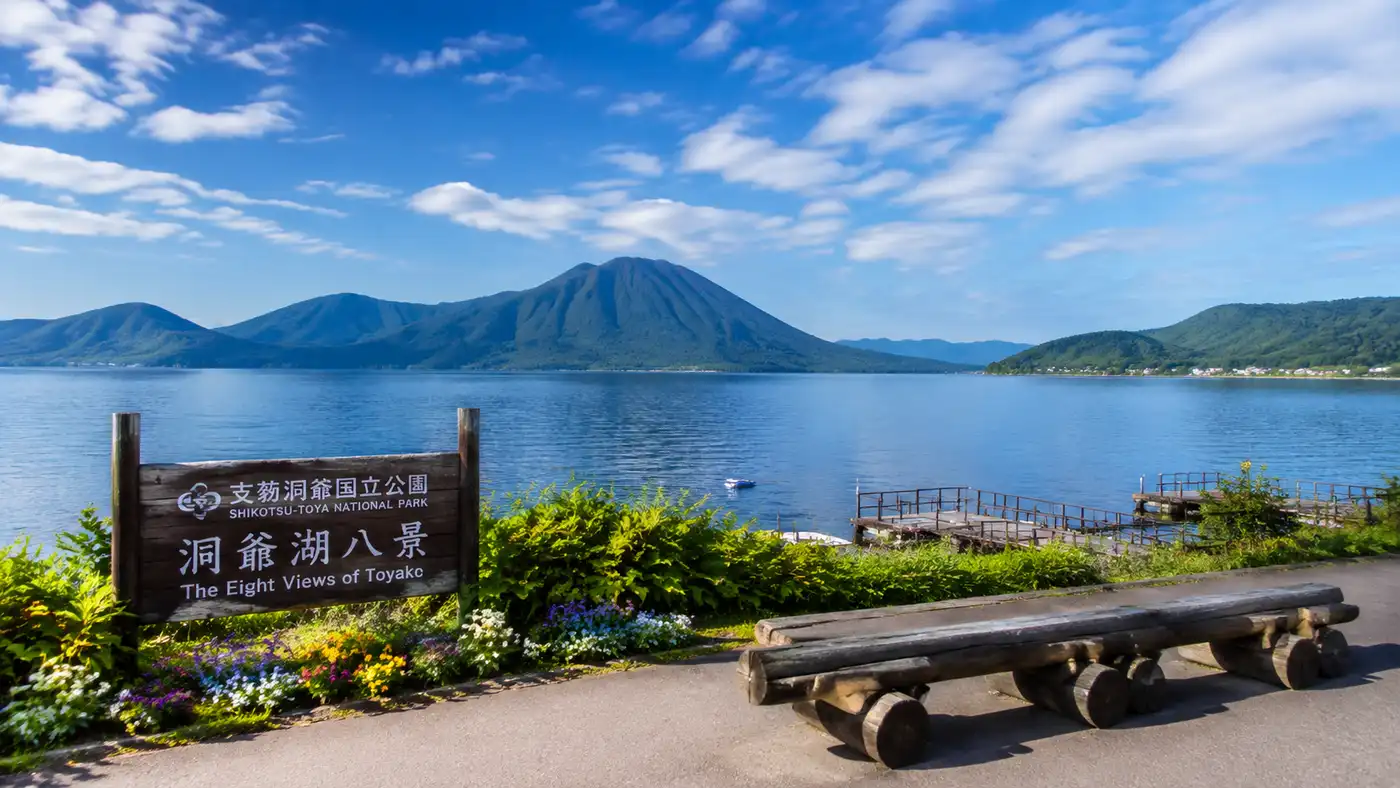
Standing by the caldera rim on a blustery morning, the water looks calm enough to mirror every cloud drifting toward Mount Yotei. Most visitors roll off the tour buses expecting a typical postcard lake with swan paddleboats and souvenir shops selling dried squid. What catches you completely off balance is the restless volcanic earth grumbling beneath your feet. Planning your days around the best lake toya attractions means stepping directly into a living landscape that altered dramatically within our lifetimes, where cracked roads simply disappear into craters and mountains rose out of potato patches overnight.
The caldera formed over one hundred thousand years ago during cataclysmic eruptions that emptied magma chambers, leaving behind a massive basin that eventually filled with clear rainwater. Because thermal vents warm the depths, the water never freezes, even when snow buries southern Hokkaido in mid-January. You can spend an entire morning watching sulfurous steam rise from open vents, catch an afternoon boat out into the uninhabited middle islands, and soak in mineral-rich waters before dinner. Whether you stay for a weekend or just stop along the train line between Hakodate and Sapporo, the place has an odd, magnetic energy that makes it hard to leave.
Book your lake toya experience:
Volcanic Heights: Lake Toya Mount Usu and the Usuzan Ropeway
Mount Usu dominates the southern skyline above the lake like a watchful, scarred sentinel. It erupted four separate times in the twentieth century alone. In 1943, underground magma pushed a flat wheat field upward until a brand new lava dome, Showa Shinzan, formed right in front of bewildered local farmers. The crimson mountain still vents hot steam through its barren rock faces today. I walked up to the base on a chilly morning, and you can smell the sulfur long before you see the ticket window.
The easiest way to get high above the basin is the lake toya usuzan ropeway, which whisks you up the slopes in about six minutes. The large glass cabins carry roughly a hundred passengers per trip, swinging gently as they clear the treetops. From the upper observation station, you get an uninterrupted panoramic view across the entire lake basin, with Showa Shinzan looking like a jagged pile of red gravel below. Behind the ropeway station, another wooden path leads to a completely different vantage point looking out toward the sparkling waters of Uchiura Bay.
Pro tip: Walk the extra fifteen minutes past the ropeway deck along the boardwalk stairs toward the Ginnuma Crater. Tour bus groups almost never bother with the stairs, leaving the sprawling ash fields and deep caldera floor in complete silence.
Lake Toya Mount Usu reminds you quickly that geology is not ancient history here. The Ginnuma Crater was blown open during the fierce 1977 eruption, throwing ash thousands of meters into the Hokkaido sky. Walking along the wooden rim path today, the landscape resembles the surface of the moon, punctuated by sparse pioneer weeds and silent crevices. Bring a windbreaker regardless of the season because gusts sweeping off the Pacific Ocean can drop the temperature on the exposed ridge by five or six degrees in seconds.
Exploring the Center: Lake Toya Nakajima Island by Ferry
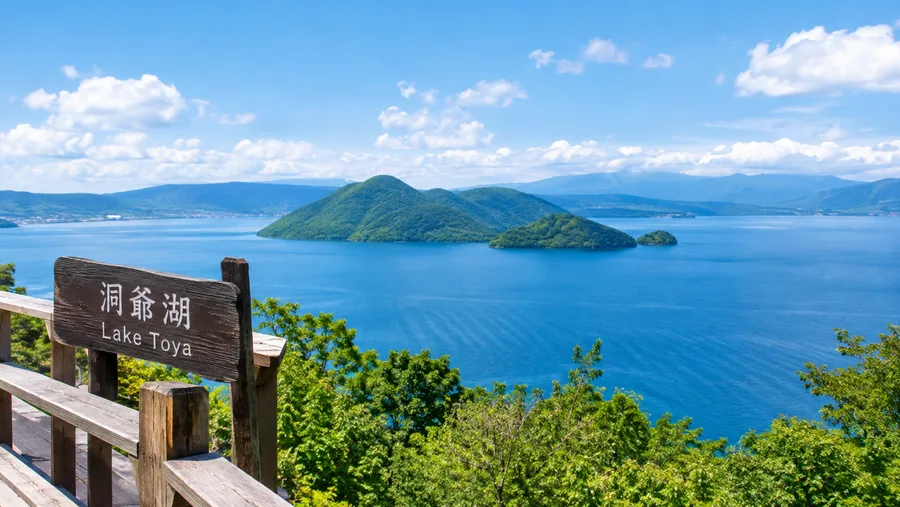
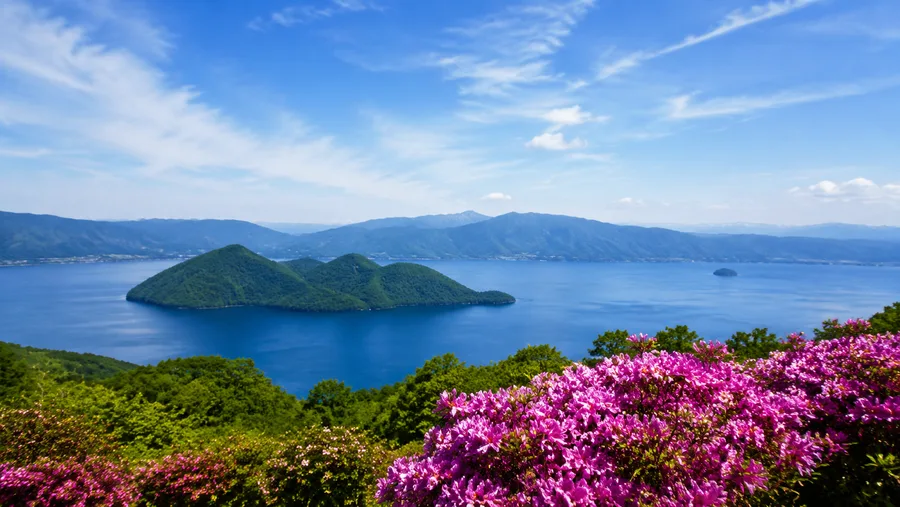
Right in the geographic middle of the water sits a cluster of four forested landmasses, collectively referred to as Lake Toya Nakajima Island. These secondary lava domes formed roughly fifty thousand years ago, long after the primary caldera collapsed. Today, they create a beautiful, layered depth to every photograph taken from the lakeshore. A quirky double-hulled cruise boat that looks vaguely like a floating European castle runs from the town pier out to the largest island every thirty minutes between spring and autumn.
The boat ride takes around twenty-five minutes each way. Gulls trail behind the vessel hoping passengers will toss snacks, their wings practically brushing the railings. Once you step onto the wooden dock at Nakajima, the atmosphere shifts instantly. There are no cars, no paved roads, and no permanent residents beyond a small team of park rangers. Dense groves of Japanese cedar, spruce, and oak trees cover the hillsides, muffling the sound of the boat engines the moment you walk past the gift shop.
- Ferry schedule: boats leave every 30 minutes between April and late October, dropping to hourly service in winter when boats only circle the island without docking.
- Trail registration: hikers must sign their names in the visitor logbook at the ranger gate before entering the interior forest paths.
- Wildlife caution: hundreds of wild sika deer roam freely across the interior, so keep a respectful distance and never leave picnic trash behind.
- Last departure: pay close attention to the departure board because missing the final boat around 16:00 means spending an unplanned night in a cold wilderness.
A simple walking trail cuts across the central plateau. Decades ago, a small group of sika deer was introduced to the island, and with no natural predators around, their population exploded. You often see them grazing quietly among the fern undergrowth. The inner forest holds a profound, mossy quiet that feels separated from modern Japan by several centuries. If you walk the loop trail, allow about two hours and wear sturdy walking shoes, as tree roots crisscross the dirt paths.
Scenery from Above: Lake Toya Silo Observatory and Lake Toya Observation Deck
If you want the classic panoramic postcard shot that appears in travel magazines, drive west along Route 230 up to the western rim of the caldera. The Lake Toya Silo Observatory perches right on the edge of the towering cliffs, roughly two hundred meters above the water surface. From this angle, you see the entire caldera laid out before you, perfectly framed by the distant peaks of Mount Usu and the snowy cone of Mount Yotei off to the northwest.
The facility itself is a bit touristy, featuring a bustling gift shop packed with regional Hokkaido dairy products and melon candies. The fresh soft-serve ice cream sold here uses raw milk from nearby farms, and it tastes astonishingly rich. Outside on the viewing platform, coin-operated binoculars let you zoom in on tiny boats crossing the deep blue surface below. It gets windy up on the exposed rim, but on a clear day, the visibility extends for dozens of kilometers across the volcanic plateau.
| Attraction | Location | Admission | Highlights | Typical Time |
|---|---|---|---|---|
| Usuzan Ropeway | South side (Mt Usu) | ¥1,800 | Crater views, active steam, bay views | 1.5 to 2 hours |
| Nakajima Island Ferry | Toyako Onsen pier | ¥1,600 | Lakeside cruising, sika deer, old forest | 2 to 2.5 hours |
| Silo Observatory | Western rim (Route 230) | Free | Caldera panoramas, local ice cream | 30 to 45 mins |
| Volcano Science Museum | Toyako Onsen town | ¥600 | Disaster footage, eruption artifacts | 1 hour |
| Nishiyama Footpath | Southwest rim trail | Free | Cracked roads, flooded ruins, active vents | 1 to 1.5 hours |
Further along the northern shoreline lies another quiet Lake Toya observation deck at the Toyako Sairo outlook, along with roadside turnout spots near Takarada. Unlike the Silo Observatory, these lesser-known stops rarely see tour buses. You can sit on a wooden bench under a canopy of birch trees, listening to the lake lap against the pebbles far below while watching weather fronts move over the water. Dawn is magical here, as mist rises off the thermal surface in thin white ribbons.
Book your lake toya experience:
Living With Volcanoes: Lake Toya Volcano Museum and the Geopark Trails
In the spring of 2000, Mount Usu erupted again after weeks of localized seismic tremors. The town evacuated over ten thousand residents with remarkable efficiency, resulting in zero casualties despite massive structural damage to roads and buildings. Today, the entire area belongs to the Lake Toya Geopark, recognized internationally for preserving the delicate relationship between human settlement and volcanic hazard. The Lake Toya Volcano Museum, located beside the central bus station, should be your first stop if you want to understand the terrain.
Inside the museum, a wide-screen theater plays raw footage captured during the 2000 eruption, complete with shaking floors and rumbling sound effects that give you a visceral sense of the earth splitting apart. Glass cases display everyday objects warped by volcanic heat, including a television set melted into an unrecognizable black lump and crushed road signs. It provides sobering context before you set foot on the actual eruption trails located just a short walk up the hill.
Note: The walking trails through the disaster zone pass near active steam fumaroles. Stick strictly to the raised wooden boardwalks, because the ground crust near volcanic vents can be unexpectedly thin and dangerous.
A ten-minute drive from the museum brings you to the Nishiyama Crater Walking Trail, easily one of the most surreal lake toya attractions you will ever encounter. The trail follows an old municipal paved road that was completely destroyed when magma surged upward in 2000, raising sections of the tarmac by more than fifty meters. You walk past abandoned apartment blocks with windows shattered by flying debris, an overgrown public bathhouse half-submerged in a newly formed mud pond, and lampposts twisted at bizarre angles. Seeing wild alpine flowers blooming through cracked asphalt right beside steaming craters is a haunting reminder of how quickly nature reclaims space.
Around the Water: Lakeside Sculptures and Village Sights
Back along the southern water's edge, the town of Toyako Onsen offers a far more relaxed pace. The shore is ringed by the Gurutto Sculpture Park, featuring fifty-eight contemporary bronze and granite works scattered along several kilometers of manicured parkland. You can rent a wide-tire cruiser bicycle from local shops for about ¥1,000 and spend an easy afternoon cycling between the installations. The path stays completely flat, running past willow trees, small grassy beaches, and public benches facing the water.
Hot spring water bubbles constantly throughout the town, and locals have tapped into it by building free public foot baths, known as ashiyu, directly along the walking promenade. You can kick off your hiking boots, roll up your trousers, and soak your feet in steaming mineral water while watching the ferry chug toward the middle island. If you want a full soak in the famous mineral baths, our detailed Lake Toya onsen guide covers the best traditional bathhouses and hotel day-use options dotted along the shore.
- Morning light: sunrise hits the central island and the surrounding volcanic ridges with a warm glow, making early morning the best time for photos.
- Foot soaking kit: carry a small quick-dry towel in your daypack so you can take advantage of the roadside foot baths whenever you need a rest.
- Nightly displays: from late April through October, small firework shows launch from moving barges every evening at 20:45, visible from anywhere along the shore path.
- Lakeshore coffee: several independent bakeries and cafes sit tucked behind the main road, offering fresh drip coffee and pastries made with local wheat.
The atmosphere along the shoreline changes with the hour. By late afternoon, the crowds thin out as day-trippers head back toward Sapporo or Hakodate. The breeze off the water cools down, and the smell of roasting meats drifts from izakayas along the narrow back alleys. Sitting on a stone wall as dusk turns the water from deep sapphire to slate grey is honestly one of the best moments you can have in Hokkaido.
Frequently Asked Questions about lake toya attractions
How much time do you need to see the main lake toya attractions?
Two full days gives you enough time to ride the Usuzan Ropeway, explore the walking trails on Nakajima Island, and walk the Nishiyama crater path without rushing. A single day trip is possible if you focus strictly on Mount Usu and a quick stroll along the promenade.
Is the lake toya geopark worth visiting if I do not have a car?
Yes, though it requires some patience with local bus schedules. Donan buses link Toyako Station to the onsen town, and local shuttles run between the hot spring village and the base of Mount Usu during peak travel seasons.
Can you visit lake toya attractions during the winter months?
Most major sites stay open year-round, including the ropeway and the volcano museum. The Nakajima ferry runs on a winter schedule where it circles the island without docking, and some crater walking trails close due to heavy snow accumulation.
Quick Reference
- Usuzan ropeway ticket costs ¥1,800 round-trip
- Nakajima island ferries operate from April to October
- Nishiyama crater trail preserves 2000 eruption ruins
- Caldera lake never freezes even during sub-zero winters
- Lakeshore fireworks run nightly from spring to autumn
Book your lake toya experience:
Worth the Trip?
Lake Toya manages to balance raw, unpredictable geology with peaceful resort comfort in a way few destinations in Japan can match. Standing on an asphalt road split open by thermal steam gives you a strange, humbling perspective on how small we are against the forces shaping our planet. If you appreciate dramatic landscapes, accessible hiking trails, and steaming mineral waters, putting these stops on your northern itinerary is worth every mile of the journey.
Read more about lake toya.