Lake Toya Activities
Most visitors pull into Toyako Onsen, check into a hot spring hotel, walk five minutes along the concrete promenade, and call it a day. That is a shame. You get a nice view of the water from your room window, sure, but you completely miss the wild geography that makes this volcanic basin so unusual. Between steaming geo-parks, ancient caldera forests, and water that never freezes, jumping into outdoor lake toya activities transforms a predictable weekend getaway into a genuine Hokkaido adventure.
The caldera was formed around 110,000 years ago during a series of colossal eruptions. Because geothermal heat warms the depths, the water stays clear and liquid through sub-zero blizzards, letting you kayak, ride, pedal, or cruise throughout much of the year. Whether you want a lazy paddle under morning mist or an exhilarating snow run along high ridges, here is an honest rundown of what is actually worth your time once you step outside.
Book your lake toya experience:
On the Water: Lake Toya Boat Cruise and Kayaking
The center of the caldera holds Nakajima, an uninhabited cluster of four forested islands. Getting out there gives you an immediate sense of scale. The most popular option is the standard lake toya boat cruise operated by Toyako Kisen. Their flagship vessel, the Espoir, looks like a floating medieval European castle. It feels utterly absurd against the wild volcanic peaks of Shikotsu-Toya National Park, yet everyone ends up smiling once it pulls away from the pier. The ferry runs every 30 minutes between late April and October, dropping passengers off at the main island for a 30-minute forest walk among wild Ezo deer.
Pro tip: Catch the 9:00 AM ferry if you want to walk the Nakajima cedar trail before the mid-day tour buses pull into town.
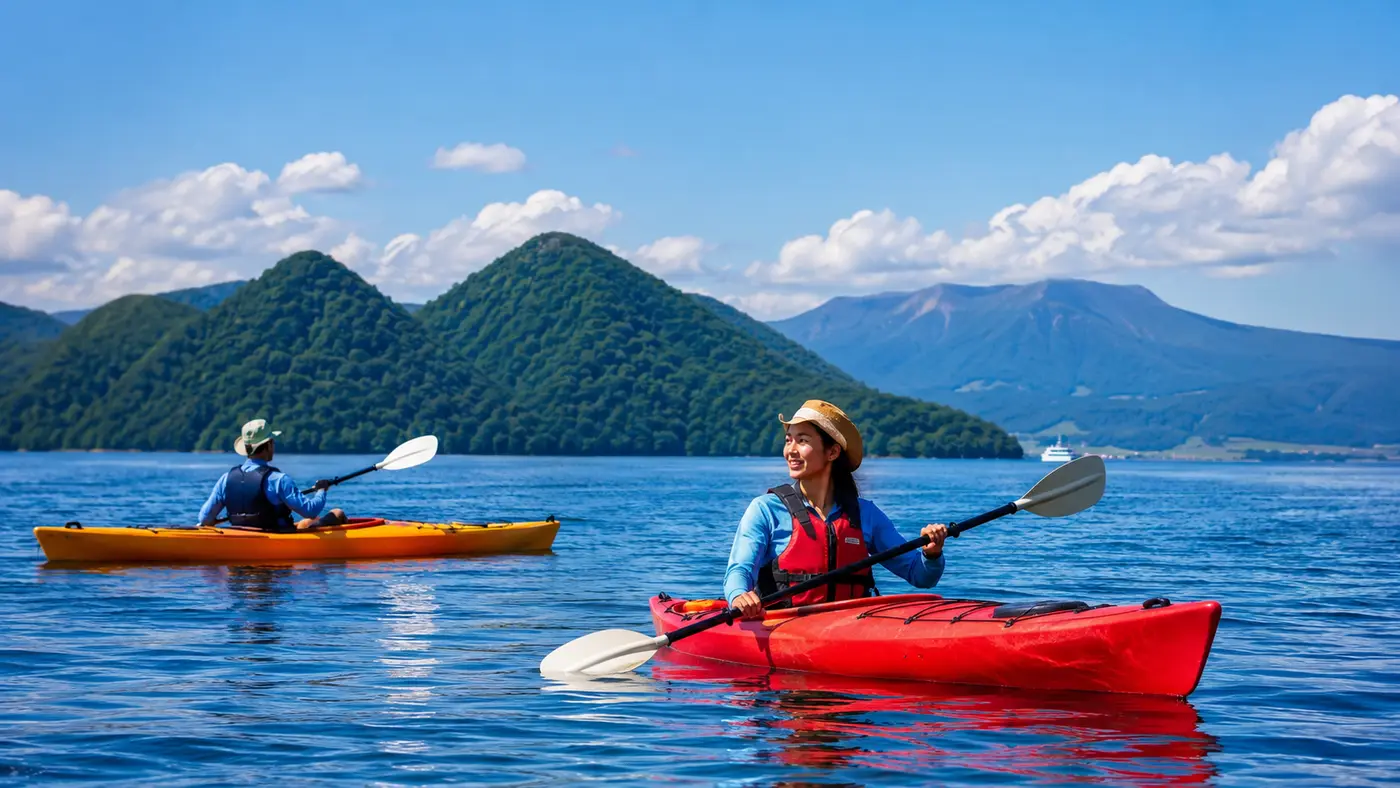
If diesel engine noise ruins nature for you, book a morning session of lake toya kayaking instead. Local guides run small groups out from the quiet beaches near Sobetsu on the eastern shoreline. Out on the water at 7:00 AM, the lake looks like dark blue glass. You glide across water so clear you can see submerged basalt rocks twenty feet down. The morning air smells faintly of damp pine needles and mineral sulfur drifting down from Mount Usu.
Paddling close to the perimeter islands reveals hidden coves where dead larch trees emerge from the shallows like bleached bones. It is eerie and dead quiet. Most guided kayak trips last about two hours, cost around 6,500 yen per adult, and require zero prior paddle experience because the caldera walls shield the surface from severe ocean swells.
Pedaling the Shoreline: Lake Toya Cycling
The ring road circling the lake spans roughly 43 kilometers. It is one of the most satisfying bike rides in northern Japan because it stays almost completely flat along the shoreline, rising gently only along the northwestern corner. Renting an electric bicycle or a sturdy cross-bike lets you escape the gift shops and hotel towers clustered in the southern resort village.
Along the way, you pass through the Gurutto Sculpture Park, a collection of 58 contemporary art installations scattered randomly around the waterline. One minute you pedal past weeping willows, the next you stumble across an enormous bronze face or a polished steel arch framing the lake center. Fruit orchards line the eastern bank around Sobetsu, where roadside stands sell crisp apples, sweet corn, and sour cherries depending on which month you arrive.
- E-bike rentals: Pick up an electric-assist bicycle near the Toyako Onsen bus terminal for roughly 2,500 yen for four hours, which makes the mild headwind on the north shore effortless.
- Scenic picnic pullouts: The stretch near Ukimido Park on the northwest corner features a tiny pagoda perched on a stone spit, making it the quietest lunch stop on the entire loop.
- Road surface and safety: The southern and western roads have dedicated sidewalks, while the northern stretch shares narrow asphalt with occasional logging trucks and delivery vans.
Plan for three to four hours if you ride an e-bike at an easy pace with camera stops. If you tackle it on a single-speed city bike rented from a hotel lobby, your legs will ache by kilometer thirty.
Ridgetop Trails and Lake Toya Horse Riding
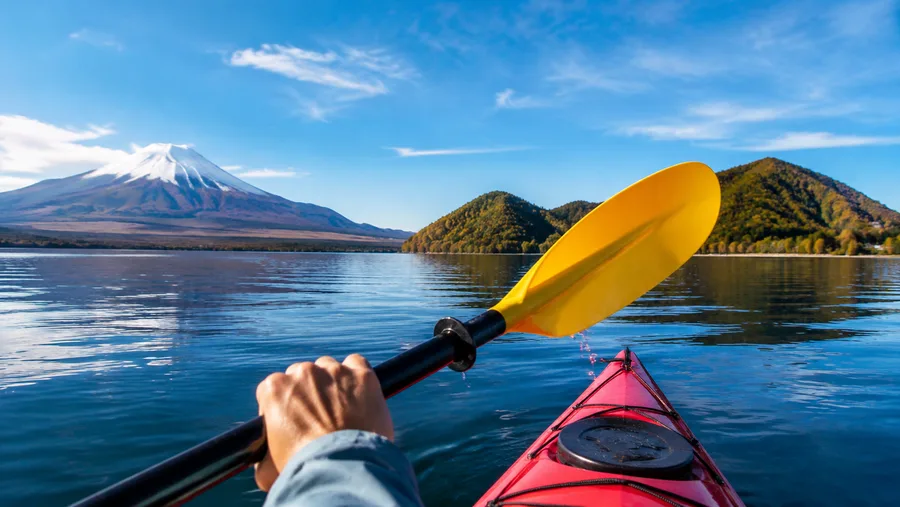
Most travelers focus entirely on water level, but the best vantage points sit high on the surrounding caldera rim. Heading west up into the hills behind the lake brings you to open farmland and rolling horse paddocks. Trying lake toya horse riding through Lake Toya Ranch (Toyako Ranch) gives you a rare high-altitude view looking down into the crater bowl on one side and out across Uchiura Bay on the other.
The ranch breeds Hokkaido dosanko horses. They are short, stocky, sure-footed mountain animals originally bred to haul timber and plow rocky fields. Even if you have never sat in a saddle, these horses follow the dirt path with stubborn reliability. They do not spook easily, even when pheasants flutter out of the roadside dwarf bamboo.
Note: Horse trekking routes operate from spring through late autumn, but you must reserve online at least 48 hours early because guide slots are limited to small groups.
Trekking courses range from a quick 40-minute introductory loop through clover fields to an 80-minute summit climb that tops out along the ridge. Standing in the stirrups at 300 meters above the lake, you can see Mount Yotei towering in the northern distance like a solitary white pyramid. The ranch charges about 5,500 yen for short courses and 11,000 yen for the longer trail ride. Wear long jeans and sturdy boots, because Hokkaido brush can be scratchy.
Book your lake toya experience:
Cold Season Thrills: Lake Toya Activities Winter Edition
When the tourist crowds disappear around mid-November, the entire basin settles into a quiet, almost moody rhythm. While nearby Niseko packs out with powder hounds, Toyako remains peaceful. Checking our guide on the best time to visit Lake Toya will show you that winter offers some of the crispest weather and fewest tour buses of the year.
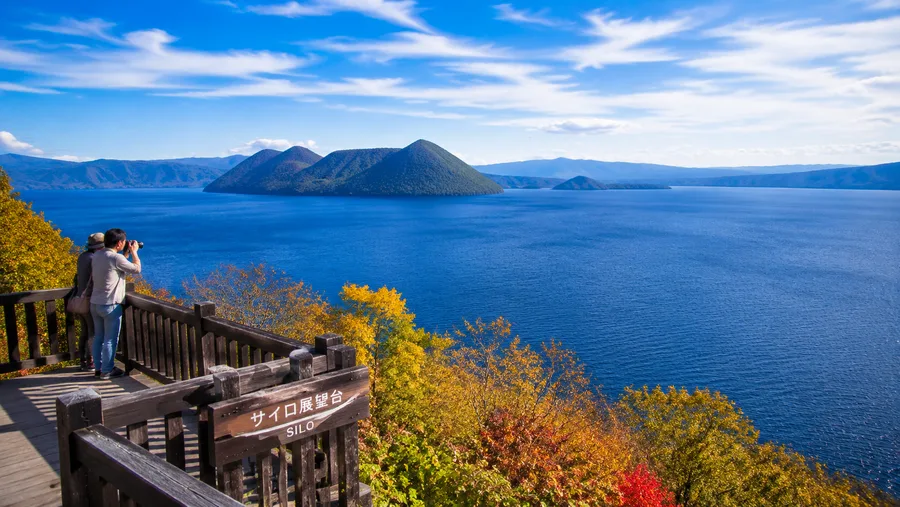
Snow falls heavily from December through March, yet the caldera water stays completely liquid, creating surreal contrast between pitch-black water and snowbanks stacked four feet high along the shoreline. Heading out for lake toya activities winter travelers usually look for snowmobile courses near the Silo Observation Deck. Operators set up wide grooming circuits across open snow fields where beginners can open the throttle without worrying about hitting fences or trees.
If you prefer muscle power over gas engines, strap on snowshoes and head into the volcanic crater trails behind Mount Usu. Walking across fields of dry powder while warm sulfur steam vents hiss through snowbanks just thirty feet away is unlike anything else in Japan. The ground vibrates gently underfoot in certain spots. After two hours tramping through sub-zero snowfields, slipping into one of the town's mineral pools feels incredible; read our complete Lake Toya onsen guide to find the best thermal baths for soaking cold joints.
Comparing Popular Lake Toya Activities
Every activity around Toya offers a different pace. Some require zero physical effort, while others will leave you drenched in sweat before lunch. To help you structure your itinerary and avoid overspending, here is how the top outdoor excursions compare in price, seasonal availability, and effort.
| Activity | Operating Season | Typical Duration | Approx. Cost | Physical Effort |
|---|---|---|---|---|
| Espoir Nakajima Cruise | Apr – Oct (Limited winter) | 50 minutes | ¥1,600 | Very Low |
| Guided Caldera Kayaking | May – Oct | 2 hours | ¥6,500 | Moderate |
| Perimeter E-Bike Loop | Apr – Nov | 3.5 – 5 hours | ¥2,500 – ¥3,500 | Moderate |
| Dosanko Horse Trek | Apr – Nov | 40 – 80 minutes | ¥5,500 – ¥11,000 | Low to Moderate |
| Ridgetop Snowmobiling | Dec – Mar | 30 – 45 minutes | ¥8,000 – ¥12,000 | Low |
| Mount Usu Crater Snowshoeing | Jan – Mar | 2 hours | ¥5,000 | High |
Before you lock in your daily plans, keep a few logistical realities in mind:
- Wind shifts: Afternoon breezes frequently whip up chop on the water around 1:30 PM, making early mornings vastly superior for kayaking and row boats.
- Public transit gaps: Reaching horse ranches and snowmobile centers up on the western hills requires a short taxi ride from town costing around 2,200 yen each way if you travel without a rental car.
- Layering essentials: Even in mid-July, morning temperatures on the water hover near 14°C, so keep a windbreaker in your day pack.
Frequently Asked Questions about lake toya activities
What are the best lake toya things to do for families with small kids?
The Espoir castle cruise boat to Nakajima is the easiest pick for families because kids love feeding the gulls from the upper deck and meeting the wild deer on the island. Pedal boats shaped like giant swans along the main onsen waterfront are also a hit and cost around 1,500 yen for 30 minutes.
Can you do lake toya activities winter without renting a car?
Yes, though it requires slightly more planning. The castle cruise runs on a reduced winter timetable directly from the main town pier. Snowshoe tours often include pick-up from major hotels in Toyako Onsen, but snowmobile centers up by the Silo Deck require hiring a local taxi from the bus terminal.
Is it safe to kayak on Lake Toya given the active volcano nearby?
It is very safe. The Japan Meteorological Agency monitors Mount Usu and the surrounding caldera 24 hours a day with seismic sensors. Guided kayak routes stay far away from active underwater vents and stick to sheltered coastal pockets.
Can I cycle around the lake in a single afternoon?
Yes. The 43-kilometer loop takes roughly 3.5 to 4 hours on an e-bike, leaving plenty of daylight for coffee stops and sculpture hunting. Just start before 11:00 AM so you return before the rental shops shut their doors at 5:00 PM.
Quick Reference
- Lake perimeter road: 43 km total distance
- Espoir cruise frequency: departures every 30 minutes
- Kayaking season: late spring through mid-autumn
- Water surface freezing: 0% chance (lake remains ice-free year-round)
Book your lake toya experience:
My Take
Lake Toya rewards people who leave the tourist strips behind. You can sit on a hotel balcony sipping canned green tea and have a perfectly decent vacation, but the caldera feels entirely different when you are paddling past misty coves at dawn or steering a sturdy mountain pony through wild clover fields. Rent an electric bike, catch an early boat, and explore the outer edges of the lake before the tour buses roll in.
Read more about lake toya.