Lake Toya Onsen Guide
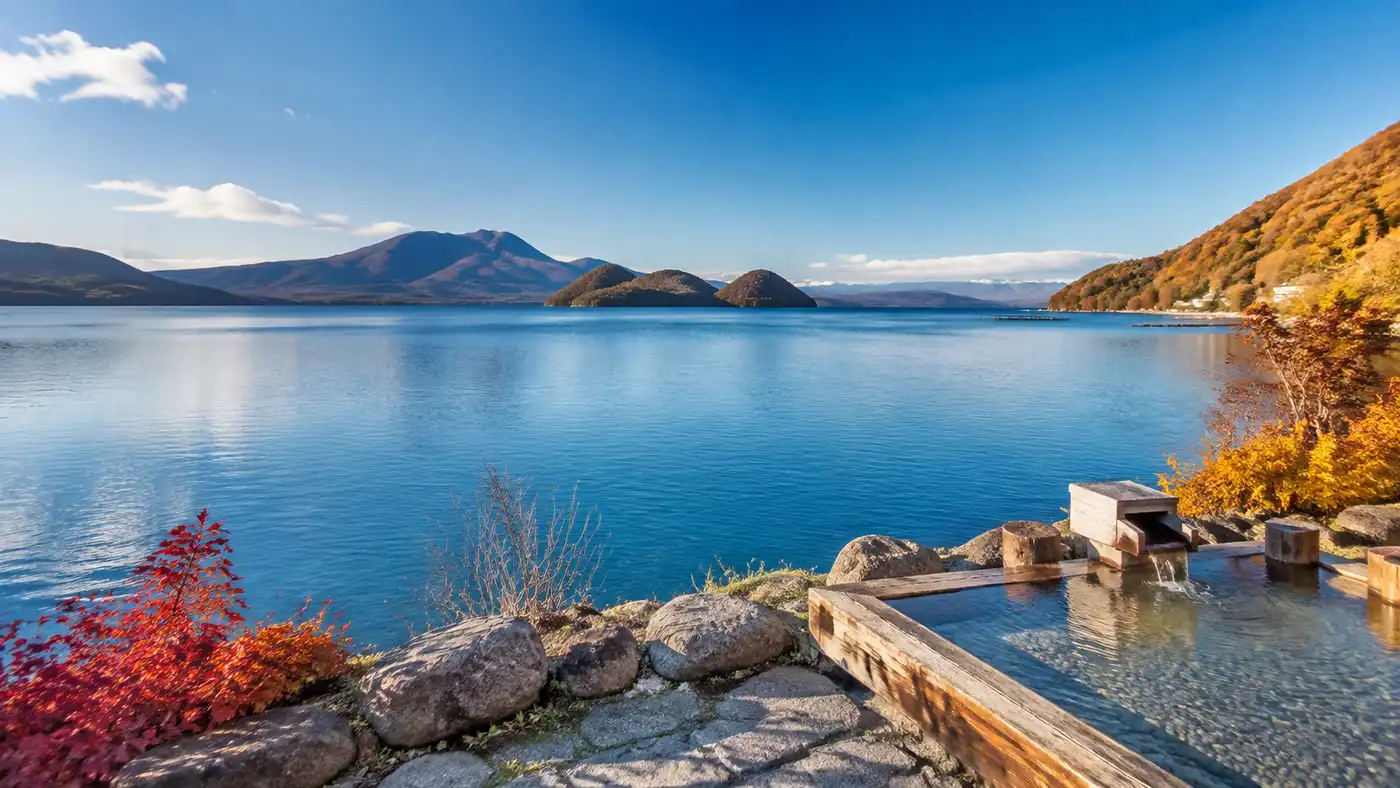
My first soak overlooking Lake Toya happened completely by accident. I had caught an early morning Donan bus from JR Toya Station, dragging a cheap suitcase across damp asphalt while freezing drizzle soaked into my shoulders. Thirty minutes later, I was neck-deep in steaming, mineral-rich water on a hotel rooftop, watching mist lift off the island of Nakajima right in the center of the lake. Experiencing a true lake toya onsen is unlike bathing anywhere else in Hokkaido, largely because the water here is bound to one of the country's most active volcanic landscapes.
The entire town hugging the southwestern shoreline exists because the earth cracked open in 1910. Mount Usu rumled, magma surged near the surface, and scalding water burst through the ground to create an instant resort district. Today, visitors arrive seeking steaming baths, lake views, and outdoor tubs where you can watch evening fireworks drift across the horizon. Navigating the town's bathhouses can be confusing if you do not know which ryokan open their doors to non-staying guests, where to find secluded tubs, or how the local mineral waters differ from tub to tub. This guide unpacks everything you need to plan a proper soak, whether you want an affordable public bathhouse or a private bath overlooking snow-capped hills.
Book your lake toya experience:
Understanding the Lake Toya Onsen Town and Its Waters
The resort strip known as Toyako Onsen sits tucked right between the lake shoreline and the northern slopes of Mount Usu. It is compact. You can easily stroll from one end of the main street to the other in roughly 25 minutes, passing retro souvenir shops, convenience stores, and steaming vents leaking white vapor into the cold northern air.
What makes a Lake Toya hot spring distinct from nearby springs in Noboribetsu or Jozankei is its chemistry. Noboribetsu smells intensely of rotten eggs due to heavy sulfur concentrations, but Toyako's springs are far gentler. The water here is classified primarily as a sodium-calcium chloride and sulfate spring. It comes out of the ground at around 50 degrees Celsius, carrying a faint, earthy aroma and a slight yellow-brown tint due to natural iron traces. It leaves a microscopic salt barrier on your skin that traps body heat. You step out into the freezing Hokkaido air and stay warm for hours.
If you prefer walking around town before committing to a full bath, the municipal board has placed free footbaths and hand baths throughout the district. There are roughly 14 of them scattered along footpaths and public squares. Yakushi no Yu, located right across from the bus terminal, features a stone trough bubbling with water said to ease joint fatigue. Most visitors wander past them without noticing, which is a mistake when autumn winds pick up.
Note: Municipal footbaths are free to use year-round, but they do not provide towels. Always pack a small washcloth in your pocket so you are not forced to air-dry your feet in cold mountain air.
The town has survived several volcanic surprises. In 1977, and again in March 2000, Mount Usu erupted violently, blanketing parts of the resort area in gray ash and forcing long evacuations. Instead of abandoning the basin, locals shoveled off the grit, repaired cracked pipes, and reopened their baths. There is a quiet resilience here that you feel when soaking in pools fed by heat chambers resting just beneath your feet.
Finding the Right Lake Toya Onsen Hotel and Ryokan
Choosing an overnight stay in town comes down to what kind of atmosphere you want. Some travelers crave sleek glass lobbies with minimalist dining, while others want creaky wooden corridors, Tatami mats, and dinner served in their room. If you are comparing your options across different budgets, our dedicated Lake Toya accommodation guide breaks down specific properties across every price bracket.
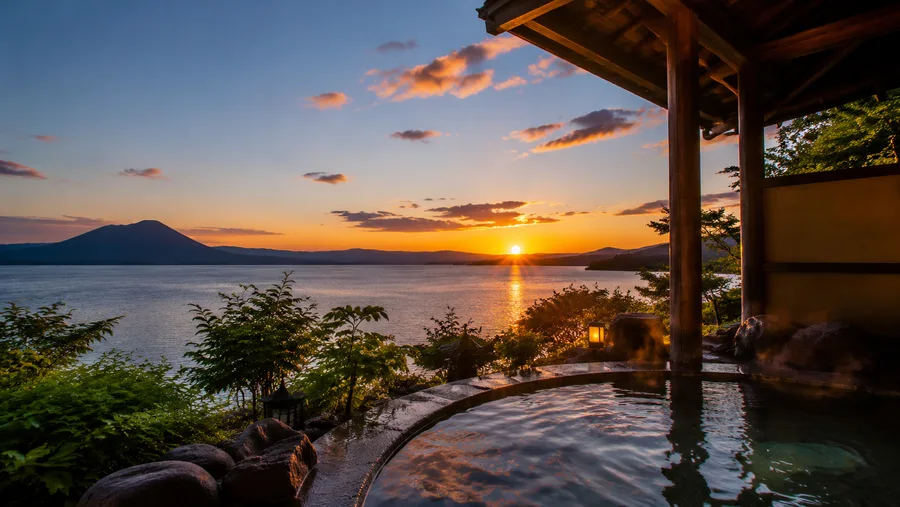
For high-end luxury, The Lake View Toya Nonokaze Resort has dominated local rankings for years. Their top-floor outdoor bath, named Tenq, puts you into an infinity pool that seems to drop straight into the lake surface. Soaking there at twilight while pink clouds reflect against the water makes the high room rate sting significantly less. The entire complex leans heavily into clean, contemporary styling with expansive windows and refined buffet dining.
If you prefer classic Showa-era charm, consider a traditional Lake Toya onsen ryokan like Kohantei. It opened decades ago, and while some carpets show their age, the traditional atmosphere feels authentic. The outdoor baths on the ninth floor use natural rocks and offer open panoramas across the water without glass partitions blocking the breeze. Downstairs, the lobby features floor-to-ceiling glass where you can sit in a yukata while sipping roasted green tea.
Toya Kanko Hotel offers an entirely different, slightly quirky personality. Aside from standard lakeview baths, they maintain an artificial underground cave bath constructed from rough stone blocks. It is dark, humid, and illuminated by amber lanterns. Floating inside feels like stepping into a subterranean grotto tucked deep inside the volcano.
When booking a Lake Toya onsen hotel, watch out for these specific details:
- Lakefront versus town view: Rooms facing the water always cost more, usually adding 4,000 to 8,000 yen to the base rate, but they give you a front-row seat to evening fireworks from May through October.
- Bath floor location: Top-floor baths provide breathtaking panoramas over the island, while ground-floor outdoor baths immerse you in rock gardens right at water level.
- Meal plan inclusions: Most traditional ryokan bundle Kaiseki multicourse dinners into the booking, which saves you from searching for open restaurants in town after 7:00 PM.
- Private bath availability: Only select properties offer bookable family tubs, which must often be reserved upon arrival rather than online.
Lake Toya Day Use Onsen Options and Public Baths
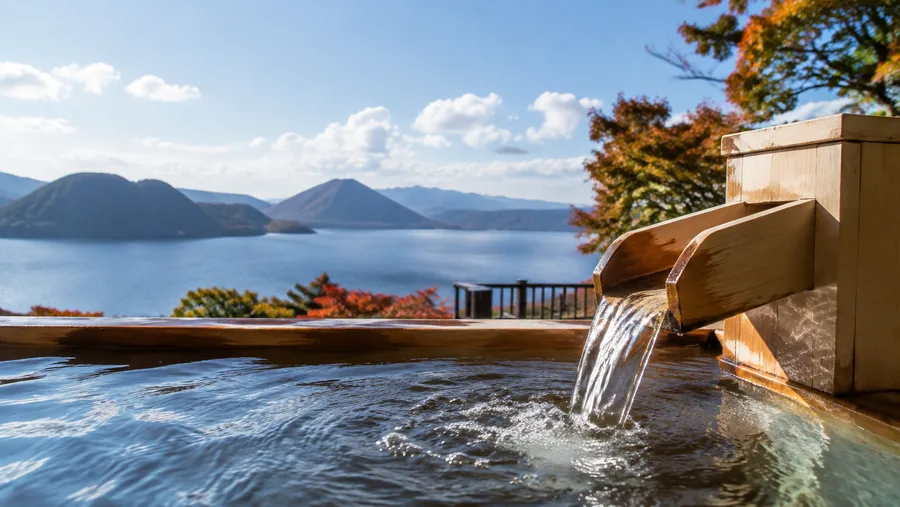
You do not need to spend 30,000 yen on a luxury ryokan room to soak here. Multiple hotels welcome drop-in visitors for a Lake Toya day use onsen experience, usually charging between 700 and 1,500 yen for entry.
Nonokaze Resort occasionally opens its baths to daytime guests, but they frequently suspend day-use access when hotel bookings are completely full. Do not rely on them as your sole day plan. Instead, aim for reliable standby facilities that keep daytime doors open regardless of overnight occupancy.
Toya Kanko Hotel allows day visitors between 12:00 PM and 9:00 PM for around 800 yen. Paying that entrance fee grants access to both their standard open-air baths and the subterranean rock cave. It is rarely crowded between 1:00 PM and 3:30 PM, making it an ideal post-hike stop before the overnight crowd checks in. Across the street, Toya Sun Palace operates an enormous indoor waterpark and bath complex. It caters heavily to families with small children, so do not expect quiet contemplation, but their lake-level outdoor infinity pool is spectacular.
Pro tip: Visit day-use hot springs on weekday afternoons between 1:00 PM and 3:00 PM, right when morning guests have checked out and overnight arrivals have not yet unpacked.
Budget travelers seeking a completely local experience should head to Toyako Machiei Onsen, often called Ikoi no Yu. This tiny public bathhouse is run by the municipality and costs roughly 450 yen. Do not expect views or luxury shampoo bars; you will be bathing alongside local retirees who have soaked in these tiled tubs three times a week for forty years. Bring your own soap, a small towel, and 100 yen coins for the shoe lockers.
| Bathhouse / Hotel | Day Use Entry Fee | Day Use Hours | Standout Bath Feature |
|---|---|---|---|
| Toya Kanko Hotel | 800 yen | 12:00 PM - 9:00 PM | Underground cavern bath and lakeview rotemburo |
| Kohantei | 1,000 yen | 1:00 PM - 7:00 PM | High-altitude outdoor rock bath overlooking the caldera |
| Toya Sun Palace | 2,000 yen (weekend) | 10:00 AM - 3:00 PM | Massive water complex with edge-to-edge lake panorama |
| Ikoi no Yu (Public) | 450 yen | 1:00 PM - 9:00 PM | Zero tourists, scalding mineral water, nostalgic tilework |
Book your lake toya experience:
Seeking Solitude: Lake Toya Private Onsen and Tattoo Policies
Traditional public baths in Japan carry strict social etiquette: complete nudity, careful washing before stepping into the water, and often strict policies regarding body ink. If you have visible tattoos or simply desire quiet time with a spouse or partner, booking a Lake Toya private onsen bath - known as a kashikiri-buro - is the simplest solution.
Private baths are rented by the hour, typically costing between 2,500 and 4,000 yen on top of standard room rates. They are fully enclosed family suites featuring their own dressing area, shower stalls, and a dedicated wooden or stone tub filled with fresh thermal water. At properties like The Lake Suite Ko no Sumika, rooms come equipped with private open-air tubs built directly into private balconies. Stepping into hot water at 6:00 AM with steam rising around you while the rest of the lake sleeps is pure magic.
Public bathhouse policies on tattoos have softened slightly across Hokkaido over the past five years, but unwritten rules remain. Large communal facilities like Toya Sun Palace still enforce strict bans on visible body art in public pools. Smaller ryokan will often look the other way if your ink is small enough to be covered with waterproof flesh-toned patches, which you can purchase at local pharmacies or front desks for about 300 yen. When in doubt, booking a room with an attached private tub spares you any awkward moments.
To make the most of private bath rentals:
- Reserve at check-in: Private bath slots between 4:00 PM and 8:00 PM vanish within minutes of the front desk opening afternoon check-in.
- Watch the clock: Rental windows run strictly for 45 to 50 minutes, meaning you need to wash, soak, and clear out before the staff knocks to sanitize the room.
- Mind the temperature controls: Thermal water flows into private tubs at high temperatures; feel free to turn the cold tap lever to balance the heat without feeling guilty.
Timing Your Soak: Fireworks and Winter Snow
Thermal water feels wonderful at any time of year, but timing your bath alongside Lake Toya's seasons changes the trip entirely. Summer brings clear skies and cool northern evenings, but autumn turns the surrounding caldera slopes a deep bronze that contrasts beautifully against dark water.
The town's biggest evening draw is the Lake Toya fireworks festival, which runs nightly from late April straight through October. Pyrotechnic boats cruise slowly parallel to the shoreline, launching shells into the night sky for twenty minutes starting around 8:45 PM. While hundreds of visitors gather along the concrete promenade in jackets, the smartest travelers watch the explosions while floating in an outdoor rooftop rotemburo. Hearing the deep thud of firework bursts reverberate against the caldera rim while hot spring steam curls around your ears is an unforgettable sensation.
Winter brings an entirely different magic called yukimi-buro, or snow-viewing bath. From December through March, temperatures routinely dip well below freezing, and heavy powder blankets the shoreline pines. Soaking up to your chin in 42-degree water while snowflakes land on your wet hair and instantly dissolve creates a sensory contrast that makes long travel days worth every train transfer. The lake itself never freezes due to thermal activity deep beneath the basin, maintaining an ink-black surface that mirrors the gray winter sky.
I find that forty minutes in these waters cures almost any travel soreness. Just remember to drink plenty of cold green tea or milk from the vending machines located right outside the bath doors. It is a time-tested Japanese ritual, and after losing half a liter of sweat in the caldera's volcanic heat, nothing tastes better.
Frequently Asked Questions about lake toya onsen
Can I visit a Lake Toya hot spring if I have tattoos?
Yes, but you should plan carefully. Large hotel public baths often ask tattooed guests to cover small ink with waterproof skin patches. For larger pieces, booking a private family bath (kashikiri-buro) or a hotel room with an attached open-air bath gives you complete freedom without restriction.
How much does a day use onsen cost in Lake Toya?
Standard day-use entry fees range from 450 yen at the local municipal bathhouse up to 2,000 yen for luxury resort bath complexes. Most standard hotel onsens charge around 800 to 1,200 yen for non-staying guests.
Do I need to make reservations for day use baths?
Generally no. Most ryokan accept day visitors on a first-come, first-served walk-in basis during designated daytime hours. However, upscale resorts like Nonokaze may restrict non-guest access during peak holiday weekends without advance notice.
Quick Reference
- Water type: Gentle sodium-calcium chloride, 50°C
- Typical day entry: 800 to 1,200 yen
- Peak soak time: 8:45 PM for nightly summer fireworks
- Getting there: 20-minute bus from JR Toya Station
Book your lake toya experience:
My Take
Toyako does not have the moody, cedar-lined alleys of an ancient mountain onsen hamlet, and some parts of the concrete shoreline show their age. But none of that matters once you are actually in the water. Floating in an open-air mineral pool while looking out across that massive, quiet caldera makes the outside world fade away in seconds. Grab a small towel, head for the shore, and let the volcano do the rest.
Read more about lake toya.