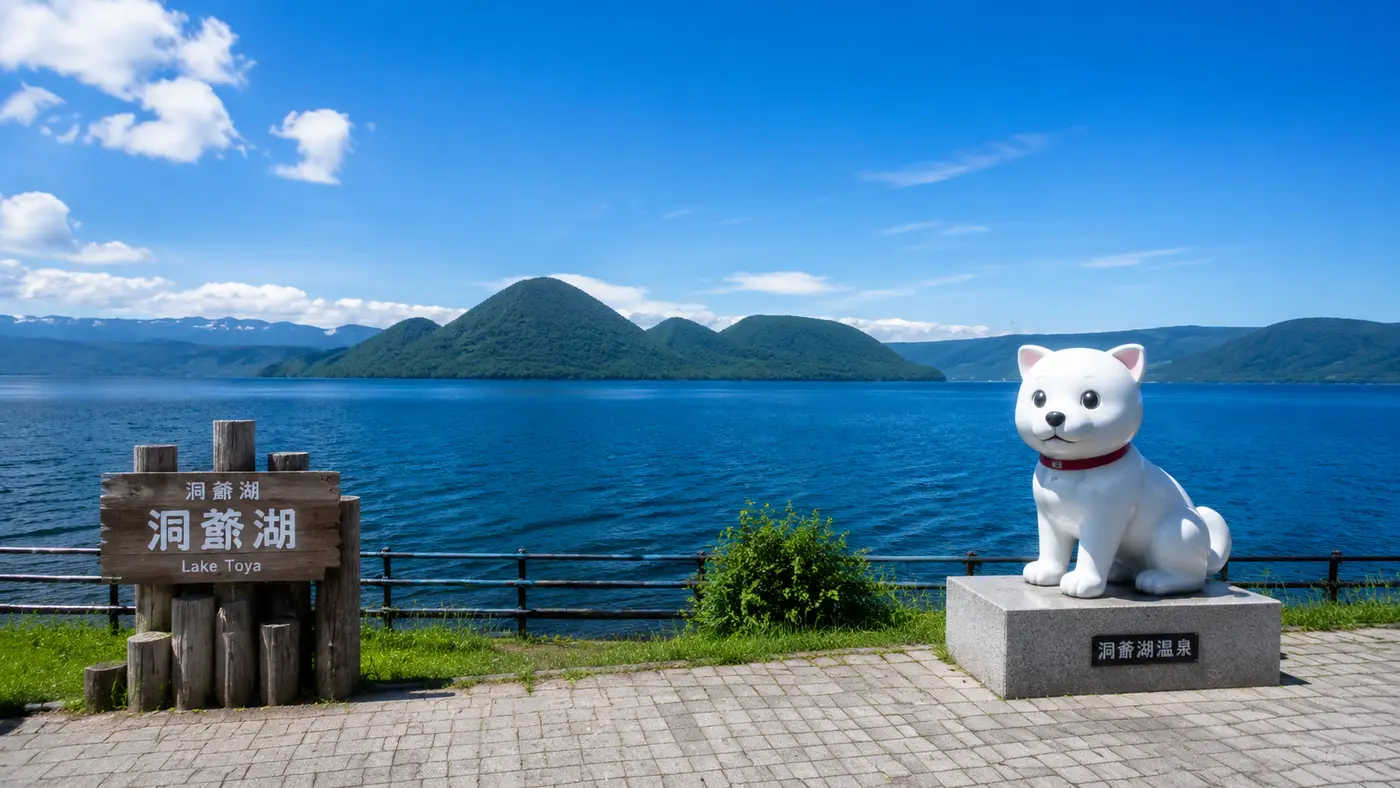
Lake Toya for Gintama Fans
Most people travel to southwestern Hokkaido for steaming volcanic calderas, milky hot springs, or quiet boat rides across crater water. Anime nerds know better. For anyone raised on Jump manga, visiting this resort town is a goofy holy pilgrimage centered entirely on a cheap souvenir stick. The connection between lake toya gintama lore and reality is delightfully ridiculous, starting with a silver-haired slacker who refused to carry real steel.
Gintoki Sakata claimed his wooden blade came from an immortal hermit living in a mystic forest during a middle school trip. In reality, he bought it from a late-night telemarketing infomercial because it looked cool and cost next to nothing. If you have spent dozens of hours watching the odd-jobs crew wreck Edo, walking into Toyako Onsen town feels like entering an inside joke that local shopkeepers embraced decades ago. You can buy the exact wooden sword, stand beside Gintoki's scooter, and soak in sulfur water while staring across the lake where the legend lives.
Book your lake toya experience:
Why Lake Toya Gintama Fans Make the Pilgrimage
Every long-running comedy has that one recurring gag that escapes the screen and latches into the real world. In Gintama, that joke is carved directly into white oak. The characters 洞爺湖 (Toyako) stamped into Gintoki's weapon were originally just a cheap souvenir marker common to tourist towns across Japan in the 1970s and 1980s. Hideaki Sorachi, the manga creator, grew up in Hokkaido and remembered seeing those swords on school excursions. He gave one to his protagonist as a disposable gag. He had no clue it would trigger a massive tourist boom years later.
Whenever someone asks about the sword, Gintoki changes his story. In the famous gintama lake toya episode, specifically episode 89, we meet Toyako-senin, the eccentric spirit dwelling inside the blade who wears sunglasses, lives with his nagging parents, and tries desperately to teach Gintoki an ultimate special attack. Gintoki simply ignores him, uses the wooden sword to crush alien metal, and buys replacement copies via mail order whenever one snaps. That self-aware silliness makes visiting the lake so charming. You are not visiting a solemn monument. You are visiting a town that sells a prop from a cartoon about a man who loves strawberry milk.
Before the manga took off around 2004, sales of souvenir wooden swords in Toyako had plummeted. Younger generations thought they were tacky relics of their parents' youth. Once Gintoki started swinging his lake toya gintama sword on television, teenagers and twenty-somethings flooded into the caldera looking for the exact same souvenir. Shop owners found themselves suddenly overwhelmed by fans asking for custom kanji engravings. The local business community even awarded Sorachi a certificate of appreciation for reviving an industry that was practically on life support.
Tracking Down the Lake Toya Bokuto at Echigoya
The beating heart of this entire subculture sits right on the main commercial street of Toyako Onsen. Echigoya (越後屋) is a sprawling gift shop that has operated here for decades, selling local sweets, dried seafood, and wooden crafts. Step through the automatic sliding doors and you will smell sweet bean cakes mixed with fresh sawdust. That smell comes from the back counter, where an artisan hunches over a whirring handheld router, carving kanji into dark wood while a small line of tourists watches silently.
Getting your own lake toya bokuto is effortless here. The store stocks racks of them in different sizes, woods, and finishes. You pick a raw blade from the rack, take it to the carving counter, and tell the craftsman what you want etched into the wood. The classic choice is, of course, the three characters for Lake Toya on the front face. You can also have your own name, a favorite quote, or the date carved into the reverse side for a tiny fee. The carver works entirely freehand, tracing elegant brush-style calligraphy into the grain with terrifying speed and precision. Watching the shavings fly takes about four minutes.
Pro tip: Visit Echigoya before 11:00 AM on weekdays if you want your sword engraved without waiting in an agonizing line behind tour bus groups.
Prices for a lake toya bokken depend largely on the length, wood density, and whether you want a scabbard or display stand. The selection ranges from cheap desktop curiosities to heavy practice weapons meant for serious martial arts dojos.
| Sword Type | Approximate Length | Wood / Material | Rough Price (JPY) | Best For |
|---|---|---|---|---|
| Standard Bokuto | 100 cm | Japanese White Oak | ¥2,500 - ¥3,200 | Screen accuracy, Cosplay |
| Heavy Suburito | 115 cm | Dense Red Oak | ¥4,500 - ¥5,800 | Forearm training, Display |
| Bokuto with Saya | 102 cm | Oak with Plastic Scabbard | ¥3,800 - ¥4,400 | Carrying on hip, Conventions |
| Mini Desk Bokken | 35 cm | Light Cedar or Pine | ¥1,200 - ¥1,600 | Fitting inside carry-on bags |
Holding the finished weapon feels oddly satisfying. It has genuine heft, balanced right near the hilt, with the fresh white wood contrasting against the burnt edges of the router groove. I bought mine on a rainy Tuesday morning and carried it around the lake like an awkward overgrown kid. Nobody batted an eye because every third person walking the promenade was doing the exact same thing.
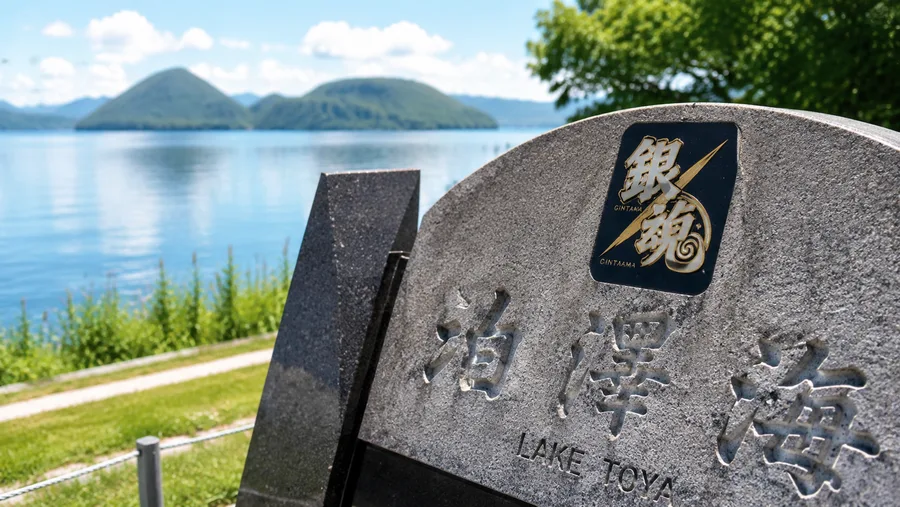
Gintoki's Scooter and Photo Ops Inside Echigoya
Echigoya is not shy about its anime fame. While the front half of the store sells normal regional gifts like melon candies and volcanic ash pottery, the rear corner is a shrine dedicated entirely to lake toya gintoki history. The centerpiece is a life-sized, custom-built replica of Gintoki's battered silver-and-red motor scooter, complete with the odd-jobs logo plastered across the bodywork. Fans line up to take pictures beside it, often striking the signature deadpan pose Gintoki makes when he owes rent to Otose.
Nearby, glass display cases hold sketches, production cels, and autographed message boards sent by Hideaki Sorachi and the anime voice cast. Sorachi's signature ape caricature sits framed on the wall alongside handwritten notes thanking the shop for playing along with the show's endless jokes. The staff has even set up character standees featuring Shinpachi, Kagura, and Sadaharu, though they look slightly sun-faded after years beneath the fluorescent shop bulbs. It feels unpretentious and local, like a roadside attraction built by people who genuinely enjoyed being pulled into pop culture history.
Note: Airlines will treat a wooden sword as a blunt weapon; security will confiscate it immediately if you attempt to bring it through the airport carry-on checkpoint.
You will also find a small vending section stocked with exclusive Gintama keychains, acrylic character stands, clear files, and hand towels that you can only buy in Toyako. Some merchandise features Gintoki wearing traditional Hokkaido Ainu patterns or munching on roasted corn. These regional tie-in goods rotate constantly, so what you see on the shelves depends entirely on what the regional distributors printed for the current season.
Book your lake toya experience:
Beyond the Bokken: What to Do in Toyako After Shopping
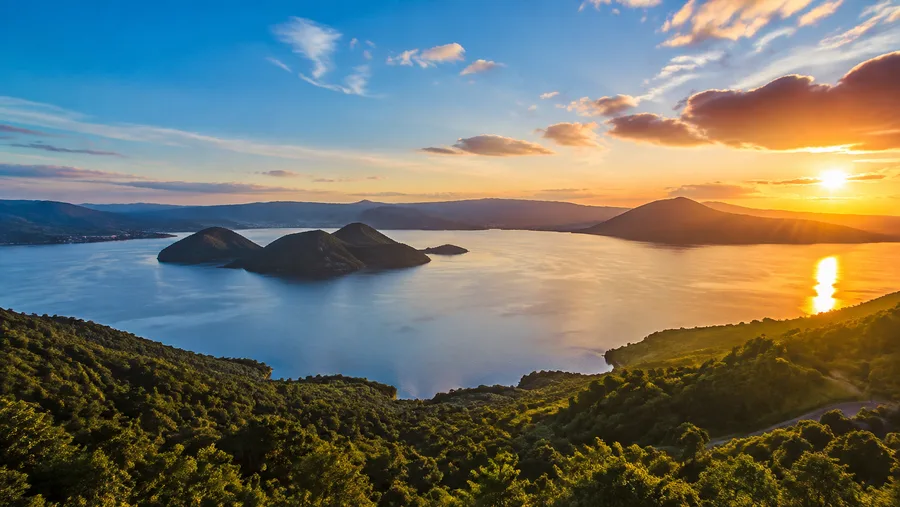
Once you finish your anime shopping spree, you are still standing in one of the most stunning geographic locations in northern Japan. Leaving immediately would be a mistake. The caldera was formed over one hundred thousand years ago, leaving a massive circular lake with a cluster of green volcanic islands sitting right in the center. The town along the southern shoreline is built entirely around geothermal springs, meaning almost every hotel lets you soak while looking out over the water.
A smart way to spend the afternoon is walking the shoreline path directly outside Echigoya. The town installed dozens of modern art sculptures along the water edge, creating an outdoor gallery that takes about two hours to stroll at a leisurely pace. You will see families feeding carp, swans drifting near the piers, and steam rising from sidewalk hand-baths where you can warm your fingers in mineral water. If your legs are tired, taking an hour or two to explore the local baths mentioned in our Lake Toya Onsen Guide makes for a perfect post-shopping reset.
- Nakajima Island Cruise: take the medieval castle-themed boat out to the central islands, where quiet forest walking trails are populated by wild sika deer.
- Mount Usu Ropeway: ride the cable car up the neighboring active volcano to stare down into smoking craters and look out over the Pacific ocean.
- Long-Run Fireworks: watch the nightly fireworks display shot from moving barges across the bay, running every single evening from late April through October.
- Lakeside Footbaths: sit on the public stone benches scattered along the promenade and soak your feet for free while checking your camera photos.
If you want to stretch your legs further, rent an electric bicycle from one of the small rental storefronts near the bus terminal. Riding around the lake perimeter takes roughly four hours if you are reasonably fit, though most visitors just cruise along the southern waterfront toward the local gelato parlors. The local dairy here is incredible. Stop for a double scoop of milk and haskap berry ice cream before heading back toward the onsen district.
Logistics: Getting to Toyako and Flying Home with a Sword
Reaching the lake requires a little planning, especially if you rely on public transit. The train station is not actually at the water edge. JR Toya Station sits down along the ocean coastline, roughly five kilometers away from the caldera basin. You take the train there, then step outside to catch a local Donan Bus that climbs up the mountain highway into the hot spring village. The ride up takes roughly twenty minutes and winds through scenic farming valleys before the massive blue lake suddenly appears out the bus window. You can check the complete transit route details in How to Get to Lake Toya.
The trickiest part of the entire pilgrimage is dealing with the wooden sword once you buy it. Full-length bokuto measure around 100 centimeters. That makes them too long to slip into a standard medium suitcase, and aviation authorities classify them strictly as weapons. Do not try to be clever by strapping it to your backpack when walking through airport security in Sapporo or Tokyo. They will take it away without hesitation.
- Pack in a long suitcase: measure your luggage diagonally before leaving home, because a large 28-inch or 30-inch hardcase can usually fit a 100 cm sword lying corner to corner.
- Ask for airline boxing: domestic Japanese airlines like ANA and JAL will happily wrap a wooden sword in heavy cardboard and bubble wrap at the check-in desk for free, checking it as sports equipment.
- Ship it via post: the staff at Echigoya can help you fill out an international Japan Post EMS shipping form directly at the store counter if you want to avoid dragging it across the country.
- Use cardboard poster tubes: buy a sturdy mailing tube from a Japanese post office, slide the bubble-wrapped sword inside, and check that tube as separate baggage.
Shipping it home through EMS usually costs between ¥3,500 and ¥6,000 depending on your destination country. That often ends up costing more than the sword itself, which is honestly the most Gintama thing imaginable. If you choose to carry it with you through Japan, just keep it wrapped in the original Echigoya plastic bag while on trains. Walking around downtown Sapporo or Tokyo openly brandishing a wooden katana will quickly invite uncomfortable questions from local police officers.
Frequently Asked Questions about lake toya gintama
Can I get my name engraved on the Lake Toya bokuto at Echigoya?
Yes. The store provides free engraving for standard phrases like Lake Toya, but you can also pay around ¥300 to ¥500 to have your personal name or custom words carved into the wood by their resident craftsman in a few minutes.
Are the wooden swords sold in Toyako real training weapons?
Most of them are authentic Japanese white oak bokuto made for kendo kata and martial arts practice, meaning they are solid, durable hardwood blades. The shop also sells lighter, cheaper decorative versions meant exclusively for wall hanging.
Can I take the wooden sword as carry-on luggage on an international flight?
No. Aviation security regulations strictly forbid wooden swords, bats, and martial arts equipment in the aircraft cabin. You must pack the sword inside your checked suitcase or check it separately as oversized sports baggage.
Quick Reference
- Sword shop: Toyako Echigoya (越後屋)
- Engraving time: 5 to 15 minutes
- Standard sword cost: ¥2,500 - ¥3,500
- Transport: Must be packed in checked luggage
- Best photo op: Gintoki scooter replica inside Echigoya
Book your lake toya experience:
Worth the Pilgrimage?
Spending half a day traveling deep into southwestern Hokkaido just to buy a piece of oak with three kanji carved into it sounds completely irrational on paper. Yet that is precisely what makes visiting Lake Toya as an anime fan so memorable. There is a deep, goofy satisfaction in standing on the caldera shore, holding the very weapon Gintoki used to slice through spaceships, while the scent of sulfur drifts across the water. Grab a bowl of hot miso ramen, buy your sword, take the ridiculous photo on the scooter, and enjoy one of the weirdest, most affectionate intersections of Japanese pop culture and rural tourism.
Read more about lake toya.